


History
Key milestones in the history of Padel
1960s – Origins
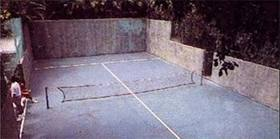
In 1969, padel was invented at Las Brisas, in a house owned by Enrique Corcuera in Acapulco, Mexico. A tennis enthusiast, Corcuera did not have enough space to build a full-size tennis court in his backyard. Instead, he created a smaller court measuring 20 × 10 metres, enclosed by 3-metre walls with a tennis net in the centre. This became the first padel court in history. The first set of rules was drafted by his wife, Viviana, a former Miss Argentina, who presented them to him as a birthday gift.
1970s – Arrival in Spain and Argentina
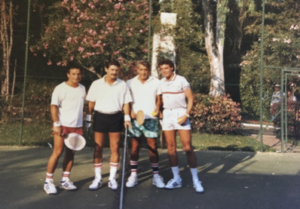
Padel was introduced to Spain in the early 1970s by Prince Alfonso of Hohenlohe, who spent his summer holidays at Corcuera’s home in Acapulco and later built padel courts at the Marbella Club Hotel in Andalusia. Around the same time, Julio Menditeguy, an Argentine member of Alfonso’s tennis club in Marbella, brought the sport to Argentina. The first courts in Argentina were built at Club Tortugas, Mar del Plata Ocean Club, and other cities across the country.
1980s – International Expansion
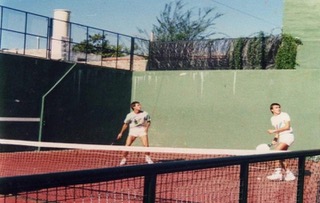
During the 1980s, padel expanded to new countries, including Brazil, Uruguay, Chile, France, the United States and Canada. In 1988, the world’s first national association, the Asociación Padel Argentino, was founded. That same year, the first international competition between Spain and Argentina took place in January in Mar del Plata, Buenos Aires Province. In 1989, a major innovation was introduced by coach Jorge Galeotti of Mar del Plata: the Crystal Palace, the first detachable and transportable glass court, which proved pivotal to the sport’s international expansion.
1990s – Institutionalisation and Unified Rules
On 12 July 1991, the International Padel Federation (FIP) was founded in Madrid by the Argentine, Spanish and Uruguayan padel associations. FIP established the World Padel Championships as a biennial event, with the first edition held in Spain (Madrid and Seville) in 1992. During this decade, rules varied by country. In 1997, Spain and Argentina reached an agreement in Barcelona to unify the rules and officially standardise the name Padel (previously “Paddle” in Argentina). By the end of the 1990s, 11 national padel federations had been established, including five in Europe and six in the Americas.
2000s – Youth Development and Professionalisation
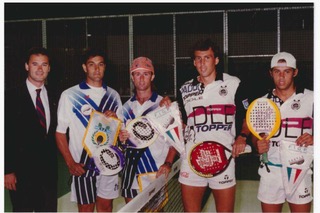
In 2000, the first World Junior Championship was held in La Plata, Argentina. Initially an annual event, it became biennial from 2003. During this period, seven additional federations were established, including six in Europe and the Australian federation. In 2005, the first international professional circuit, the Padel Pro Tour (PPT), was launched by private organisers and ran for eight seasons.

2010s – Global Growth and New Circuits
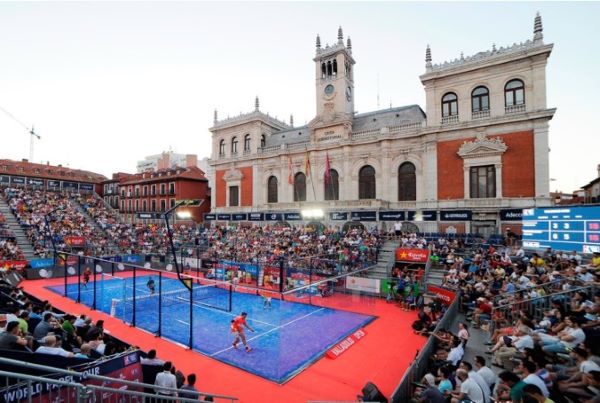
Throughout the 2010s, new national federations were established worldwide, and by the end of the decade more than 40 were affiliated with the FIP. In 2013, the PPT was replaced by the World Padel Tour (2013–2023). In 2018, the first Senior World Championship was held in Estepona/Benahavís, Málaga, Spain. In 2019, FIP launched its international circuit (renamed the CUPRA FIP Tour in 2020) to support the continued global growth of padel.
2020s – Consolidation and Global Governance
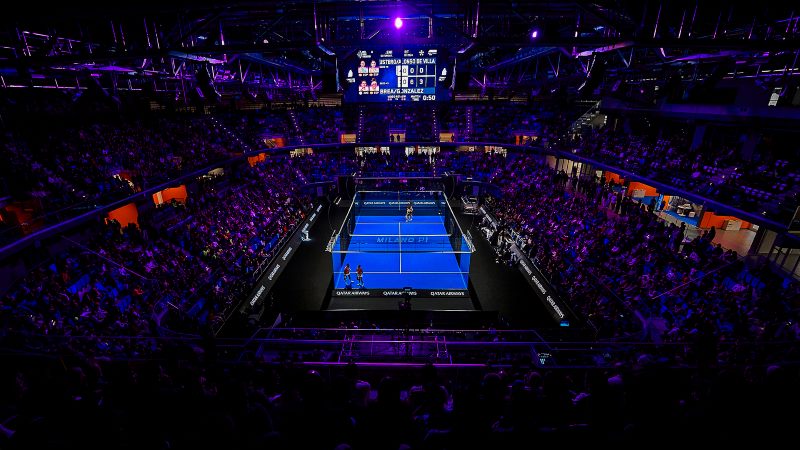
In 2021, FIP launched FIP Promises, a youth circuit for boys and girls in the Under 14, Under 16 and Under 18 categories. In 2025, an Under 12 category was introduced. By 2023, the milestone of 70 affiliated federations and more than 160 international tournaments worldwide had been achieved. Established in 2022, Premier Padel became the official global professional tour governed by FIP and supported by Qatar Sports Investments (QSI). By 2024, the tour featured 24 tournaments in 16 countries. As of 2026: • 100 federations are affiliated with FIP • Padel is played in more than 150 countries • There are approximately 35 million amateur players worldwide In 2026, FIP introduced a new format for the junior circuit, launching four FIP Promises Continental Tours to develop young talent globally. From April 2026, FIP will launch FIP Beyond, a circuit dedicated to amateur players. The Federation has also officially recognised and governed the Hexagon World Series, a global team-based padel circuit integrated into the official FIP calendar.
Padel is a sport for all, regardless gender, age, skill levels “Talent and entertainment have no limits”


